Hidden Ireland Georgian Holidays Accommodation Cottage Rental Bed and Breakfast

Holidaying the Georgian way with Hidden Ireland

Going on holiday is by no means a modern phenomenon. It has always been part of human nature to want (and need) to take a break from daily life every now and then and to set down working duties and commitments for a bit to give our bodies and minds a rest. Choosing a Hidden Ireland house, cottage or hotel for your break ensures beautiful accommodation, excellent facilities and interesting surroundings to explore.

Many Hidden Ireland properties are Georgian in origin, which prompts the question: where did the Georgians go on holiday?

Georgian transportation

Travel was becoming easier by Georgian times due to developments in transportation that opened up many possibilities hitherto denied to previous generations who mainly travelled by foot – or by horse if they could afford one. Wealthier Georgians were able to take advantage in the rise of horse-drawn carriages, which were increasingly built with comfort in mind to help passengers endure longer journeys. Having said that, the state of many roads remained perilous, so travel could still be rocky and bumpy.

The rise of public carriages, as opposed to smaller, private ones, allowed more people across the classes to access transport, so long as they could pay their fare. This change, coupled will increasing curiosity about further-flung places, meant more people began to venture further afield.

Irish holiday destinations

Popular destinations for Irish holiday-makers, as well as those visiting from other countries included newly fashionable seaside resorts like Dublin Bay and Waterford, where people could go sea bathing and breathe in the ‘sea air’, believed to offer restorative health benefits. Similarly, wealthy Georgians flocked to spa resorts like Connemara to ‘take the waters, or culturally interesting cities and towns, such as Armagh City, which is famous for its beautiful Georgian architecture

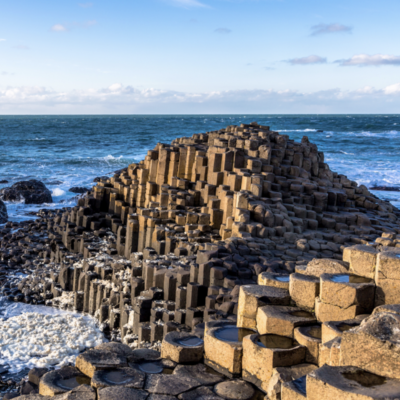
Another popular holiday option was to travel to a picturesque countryside location to admire the surroundings and discover ‘curiosities of nature’ that could be talked about back home. Favourite countryside destinations included the Giant’s Causeway, Killarney and the Cliffs of Moher.

The Grand Tour

One travel phenomenon that was highly popular among the aristocratic classes of Georgian Ireland (and elsewhere in Europe) was the Grand Tour. This was a prolonged tour of European countries and cultural centres where the focus was on studying subjects such as art and architecture, poetry, music and classical history. It was mainly wealthy young men in their twenties who embarked upon a Grand Tour in order to gain a broader perspective on life and meet new people. They were usually accompanied by a tutor or family member who could help them appreciate what they were seeing and to guide their routes and experiences.

If you would like to follow in the footsteps of culturally-aware Georgian holidaymakers and stay in beautiful, historically preserved accommodation while doing so, take a look at the Hidden Ireland website to book your next stay.

If you need to contact Hidden Ireland to find out more about our country houses, cottage or properties please click HERE

Check out our social media pages:
FACEBOOK | INSTAGRAM | TWITTER

Hidden Ireland Accommodation Cottage Rental Bed and Breakfast

How the Georgians lived (and decorated their houses)

In an increasingly uncertain world, many of us are finding comfort in looking back to the past to take inspiration from our ancestors in all kinds of ways, from hobbies to holidays; dressing to design. The Georgians were especially interested in creating beautiful interiors for their homes and important buildings, particularly favouring symmetry and strong focal points in their rooms.

Many of the cottages, country houses and boutique hotels that are part of the Hidden Ireland portfolio originate from Georgian times. Tell-tale elements of balance, soft colours and elegant decorative details immediately stand out to guests, who enjoy being surrounded by elegant, historical interior decor during their stay.

Symmetry, balance and focus

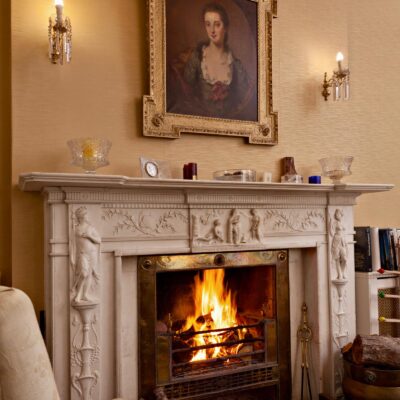
Georgian interior design was largely centred around a focal point in each room, such as a fireplace or large window. Furniture tended to be arranged around this focal point. Matching pieces, such as identical bookcases, armchairs or statues often flanked important areas in order to draw attention to them.

Visual harmony was key and furniture and fittings were carefully chosen to add harmony, rather than draw attention in their own right. Fireplaces were accentuated with ornate wooden or marble surrounds to add even more interest to them as the chosen focal point.

Floors, walls and ceilings

Georgian interior design indulged itself in decorative details, with ornate ceiling roses, cornices and dado rails a common sight in higher-class rooms and spaces. Floors were either covered in beautiful Oriental carpets if they were plainer, or, if made from decorative marble or stonework, left uncovered to allow the beauty of the stone to speak for itself.

Windows were often tall and beautifully designed to add interest on their own while maximising the amount of light they let into the room. Walls, too, were designed to be decorative even before any paintings or wall hangings were added. Wooden panelling was popular, with dado rails that divided the walls in half vertically allowing a clear separation between the panels below and a painted or wallpapered section on the top.

Colours and textures

Finally, many Georgian homes, including many examples of Hidden Ireland accommodation, were decked out with muted colours, rather than golds or bright reds. Popular shades included dusk pinks, burgundy, sky blue and pea green, with brighter tones used sparingly as accent colours for more formal spaces.

When it came to textiles, luxury was the watchword, with indulgent fabrics like damask, velvet and silk topping the list for drapes, upholstery and wall hangings. This preference for luxury was also reflected in furniture design, such as the high-end, delicate pieces produced using mahogany or walnut wood by leading Georgian furniture makers such as Thomas Chippendale.

If you are interested in staying in historically preserved Georgian accommodation with fine examples of colour, décor and symmetry in every room, take a look at the Hidden Ireland website to book your next stay.

If you need to contact Hidden Ireland to find out more about our country houses, cottage or properties please click HERE

Check out our social media pages:
FACEBOOK | INSTAGRAM | TWITTER